Best Tonsil Stone Remover for Bad Breath
What You Really Need to Compare Is Not Which One Looks the Most “Professional,” but Which Type Fits You Better
When people search for Best Tonsil Stone Remover for Bad Breath, the judgment in their head is usually very direct: as long as it can get the tonsil stones out, the more professional, more thorough, and more medical-looking the tool is, the better. But what you are really trying to solve is usually not “Did I buy a tool that looks powerful enough?” What you really want to know is why, even though you are already brushing, rinsing, scraping your tongue, and even cleaning between your teeth, a very specific, stubborn smell still keeps showing up, the kind that seems to come from deeper in the throat. It becomes especially obvious when you talk closely to someone, when you wake up in the morning, or when you suddenly catch that familiar smell yourself and start wondering whether the problem has come back again.
This is exactly where tonsil stone removers are easiest to buy the wrong way. It feels very natural to focus on whether they can “get everything out in one go,” because this kind of problem is frustrating by itself, and once people start suspecting tonsil stones, they often want to deal with them as quickly as possible. But once you actually begin looking at these tools, you usually realize that the real issue is not whether the tool looks professional enough. The issue is whether it matches the layer of support you most need right now. For some people, the key is being able to see clearly first instead of poking around blindly. For others, the key is something gentler and easier to start with. And for some people, what they really need is a small tool that works for occasional at-home removal, not a complicated setup they end up being too nervous to use.
Mayo Clinic includes tonsil stones among the possible causes of bad breath. Cleveland Clinic also clearly points out that tonsil stones can create a very distinctive odor problem. In other words, a tonsil stone remover is not a product that everyone needs, but for people who already strongly suspect that their bad breath is coming from tonsil stones, it is definitely not a tool you should just buy casually or choose randomly.
So this article is not going to use that scattered “just list a few products” style, and it is not going to focus on brand popularity. What matters more is helping you see one thing clearly: Best Tonsil Stone Remover for Bad Breath is not one fixed answer. It is a matching problem. What you really need to compare is not which one looks the most like a professional medical tool, but which type of tonsil stone remover comes closest to the layer you most want to solve right now.

Why Some Tonsil Stone Tools Make You Feel Like You “Probably Bought the Right Thing,” but Still Never Really Get Used
You may already have had this experience. When you first see these tools, it feels like they are finally not just another toothpaste or mouthwash type of general oral-care product, but something that goes more directly at the suspected source. Instinctively, you feel that if you can get the stones out, the smell might improve a lot. So the first time many people look at this category, they place very high expectations on it.
But when it comes to actually using the tool yourself, you may slowly realize that some look complete and professional, but you do not dare to use them anywhere near the throat. Some are small and compact, but visibility is so poor that the moment you try to use them, you get more tense and uncomfortable. And for some tools, the problem is not that they are not professional enough. It is that they do not fit the stage you are at right now. What you actually need first may be to confirm whether it really is tonsil stones, to find a way to see the area more clearly, or to start with a gentler removal approach. But instead, you jump straight to a tool that looks strong. That often creates a very common mismatch: when you buy it, it feels like you have finally found the right direction, but when you actually try to use it, you cannot perform the process consistently at all.
That is why so many people have already bought a tonsil stone remover and still have not really dealt with that recurring smell from the back of the throat. The problem is not necessarily that the tool does nothing. The issue is that the type you bought may not fit the problem you most often run into right now. What you really need to solve is not “Did I buy a stronger removal tool?” It is “Am I actually at the stage where I should be using this kind of tool, and which format fits me well enough that I can really use it?”
So instead of continuing to chase whichever one is the most popular, it makes more sense to change the judgment logic first: figure out what kind of tonsil-stone use scenario sounds most like you right now, and then compare the remover types that fit that scenario best. Once you do that, your choices become much clearer, and it starts to feel more like solving the real problem rather than putting your hope yet again into a tool that looks powerful but is too intimidating to use.
If What You Need Right Now Is a Gentler Start and More Control, Which Type of Remover Should You Compare First?
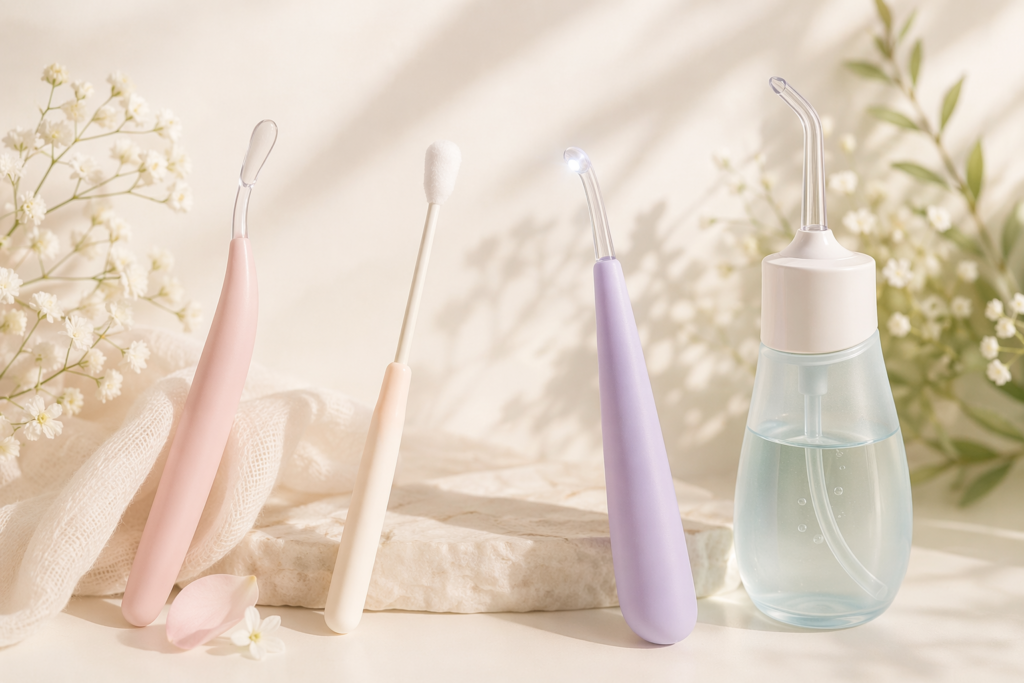
If your situation sounds more like this: you have started to suspect that the problem may be related to tonsil stones, but you are not the kind of person who wants to jump straight into a very aggressive tool, and what you care about more is not making things too irritating, not triggering too much gagging, and not getting yourself overly tense right away, then what is usually more worth comparing first is not the route that looks most like a probe. What often makes more sense is something closer to a gentle tonsil swab or soft-tip remover.
This type of tool makes more sense for the stage where you want to confirm first, try first, and avoid too much pressure. What you need most right now is not to force yourself straight into high-difficulty removal. What matters is whether the step feels gentle, controlled, and psychologically manageable. For you, the most important thing is whether you dare to use it, whether you can see clearly enough, and whether you will quit right away because it feels too uncomfortable, not whether the packaging makes it look more professional.
If you are reading this and already feel like you are more the type who is not completely unwilling to deal with the problem, but would rather begin with something gentler and lower-pressure, then what is most worth looking at next is usually not the most complicated device. It is the remover types that lean more toward being soft, controllable, and easier to start with. Because what you most need to solve first is not maximum removal. It is whether you can start doing this at all without backing away every time you think about it.
If you are more the type who is just beginning to confirm and handle tonsil stones, or if you tend to get nervous easily and have a strong gag reflex, then the categories below usually deserve more of your attention, because they are closer to the step of gentle starting and low-pressure trial use rather than simply making you feel like you bought something “professional.”
If you’re just starting to explore and experiment with this type, the removers listed below are worth prioritizing, as they offer a gentle, user-friendly experience and a low-pressure way to give it a try.
If you’re starting to suspect that the problem isn’t just ordinary bad breath but is related to tonsil stones, the article below is perfect for you to gain a clearer understanding of whether tonsil stones can cause bad breath.
If Your Problem Feels More Like Something You Can Already See Repeatedly and Sometimes Remove Yourself, You Should Be Looking at a Different Type of Remover
But not everyone is still at the “gentle first try” stage. For some people, the real issue is not whether they dare to start. The problem is already fairly clear. You may already have looked with a mirror, or even removed one yourself before, and you know that the location, that smell, and that little chunk-like thing are probably the source. For this kind of situation, what you really need to compare is not whether it feels too stimulating. What matters more is whether you can see well enough, use it efficiently enough, and handle it more smoothly at home when it shows up again. That is when something like a lighted remover, irrigation-style tonsil tool, or mirror-assisted kit often becomes more worth prioritizing, because those formats lean more toward visibility and at-home efficiency.
For you, the issue is no longer “Do I dare to touch this?” It is “Can I deal with it more steadily without making the whole process miserable?” In other words, if your situation already feels more like “I do know where it is, I just never deal with it smoothly enough,” then what deserves your attention next is no longer the lightest beginner-style option. It is the remover type that is better suited to improving visibility, handling efficiency, and your success rate with occasional at-home removal. Because what you really need to solve now is no longer whether to begin. It is how to deal with this layer more reliably.
So if you already feel like you are more the type whose problem location is fairly clear, who can occasionally remove one, but who still never feels efficient or smooth doing it, then what is more worth comparing is not the most basic route. It is the kinds of removers that lean more toward added lighting, better visibility, rinse assistance, or mirror support as a more complete at-home handling setup. Because what you really need to solve is not “Am I aware of the source?” It is “Can I deal with this recurring source with less stress and more control?”
If this is not your first time suspecting tonsil stones, and you already know the problem is probably in that area, then the categories below usually deserve more of your attention, because they are closer to the layer of recurring appearance, occasional at-home handling, and improved visibility and efficiency rather than just first-time experimentation.
If you’re the type of person who has a pretty clear idea of where the problem lies but still struggles to resolve it smoothly, the removers listed below are worth considering over standard lightweight options, as they better meet your current needs for visibility, assistance, and efficiency when working from home.
If you’re increasingly suspecting that the problem isn’t just “ordinary bad breath” but is related to a recurring, specific source, then the support page below is more appropriate here to help readers understand why the problem keeps coming back.
How You Should Really Compare These Tonsil Stone Removers Instead of Just Looking for the One That Looks Most Like a “Professional Tool”
If you connect the logic above, you start to see something much more clearly: what is really worth comparing under Best Tonsil Stone Remover for Bad Breath is never “which one looks most like a professional instrument,” but “which one comes closest to the point where I am stuck right now.” You are not looking for one tonsil-stone tool that everyone says is the best. You are looking for a removal method that fits your current stage and problem pattern more closely.
If you are more the type who is just beginning to confirm and try handling the issue, and who is also more sensitive to discomfort and stimulation, then you should prioritize gentle beginner-friendly options.
If you are more the type whose problem location is already fairly clear, who can occasionally remove one, but who never feels that the process is smooth enough, then you should prioritize routes with stronger visibility and better support.
If what matters most to you is whether you will actually dare to use the tool when needed, then lower-pressure, more controllable kits also make more sense.
And if you have already bought something similar before but always felt, “It’s not completely useless, I just never really dare to use it properly,” then you should compare from the perspective of real-use situations rather than from how “professional” the tool looks.
In other words, what you really need to solve is not “Which one looks most like a professional removal tool?” It is “Which kind of tool makes it realistic for me to deal with this more steadily when I actually need to?” Once that matching logic becomes clear, your next choices become much simpler, and you are much more likely to buy the type you can actually use.
Tonsil Stone Removers Matter, but If You Want a More Complete Way to Handle Bad Breath, You Cannot Stop at Tonsil Stones Alone
A tonsil stone remover absolutely has its place, but it is not necessarily the whole answer. When Mayo Clinic discusses bad breath, the focus is not just on one tool. It looks at dry mouth, the tongue, incomplete cleaning, and possible fixed sources together. NHS guidance for bad breath also always keeps brushing, cleaning between the teeth, and the overall routine in front. In other words, if tonsil stones really are your source, then of course this kind of remover can help you handle that layer more smoothly. But if you also still have tongue buildup, trapped debris between the teeth, dry mouth, lingering odor after brushing, or an overall care sequence that does not really fit your situation, then the improvement you feel may still remain limited.
So the more realistic approach is not to place all your hope on one tonsil-stone tool. It is to first confirm whether this is actually your real source, then use the remover that fits you better to handle that layer, and then step back and look at which parts of your whole oral-care path still deserve support. That way, you are less likely to stay stuck in the cycle of thinking, “I already bought this tool, so why does it still not feel fully right?”
If you’d rather not just keep switching tools but want to get a clear picture of the entire process for addressing bad breath, the comprehensive guide below is a better fit for you—keep reading.
Best Tonsil Stone Remover for Bad Breath Is Not One Universal Answer, but the Type That Fits You Better
When many people search for Best Tonsil Stone Remover for Bad Breath, what they want is the most direct and standard answer possible. But the answer that usually comes closer to real-life experience is this: the best one for you is not necessarily the one that looks the most professional, and not necessarily the one with the most complicated tool setup. It is the type that fits your current problem pattern, your tolerance level, and your real-life use scenario more closely.
If what matters most to you is gentle confirmation and a lower-pressure way to begin, then start with soft-tip and gentle-try types.
If what matters most to you is that the source location is already fairly clear and you want to improve your at-home removal efficiency, then start with lighted, mirror-assisted, or rinse-assisted types.
If what matters most to you is whether you will actually dare to use it, then move the more controllable, lower-pressure routes closer to the front.
Once that matching logic becomes clear, your next choices become much simpler, and you are much more likely to handle this fixed-source type of bad-breath problem in a steadier way.
Affiliate Disclosure:
Some of the links on this page may be affiliate links, which means we may earn a small commission if you make a purchase through them, at no extra cost to you. We only recommend products that are relevant to the topic and that we believe may be genuinely useful to readers.
Medical References:
Mayo Clinic
Cleveland Clinic
NHS
American Dental Association (ADA)