Best Whitening Strips for Sensitive Teeth
If you want whiter teeth but your teeth are also the type that react easily, whitening can start to feel less exciting and more stressful. You do not just think about whether something works. You think about whether it will feel too sharp, too strong, or too uncomfortable by day three. That is exactly why whitening strips can feel confusing. They sit in the middle ground. They usually do more than toothpaste, but they also feel more serious than a casual brightening step. So if your teeth are sensitive, the real question is not simply whether whitening strips work. It is whether you are choosing the kind of strip, the pace, and the intensity that your teeth can realistically tolerate.
A lot of people get this part wrong because they shop as if all whitening strips belong in one category. They do not. Some are clearly made for stronger, faster visible brightening. Some are better suited to people who want a lighter, steadier, more manageable upgrade. If your teeth are already reactive, that difference matters more than the marketing on the box. The American Dental Association explains that whitening products work through peroxide-based bleaching ingredients, and temporary sensitivity is one of the effects people may notice during whitening. That is why “best” for sensitive teeth does not mean “strongest.” It means the strip type that gives you the most realistic improvement without pushing your comfort past the point where you stop wanting to use it.
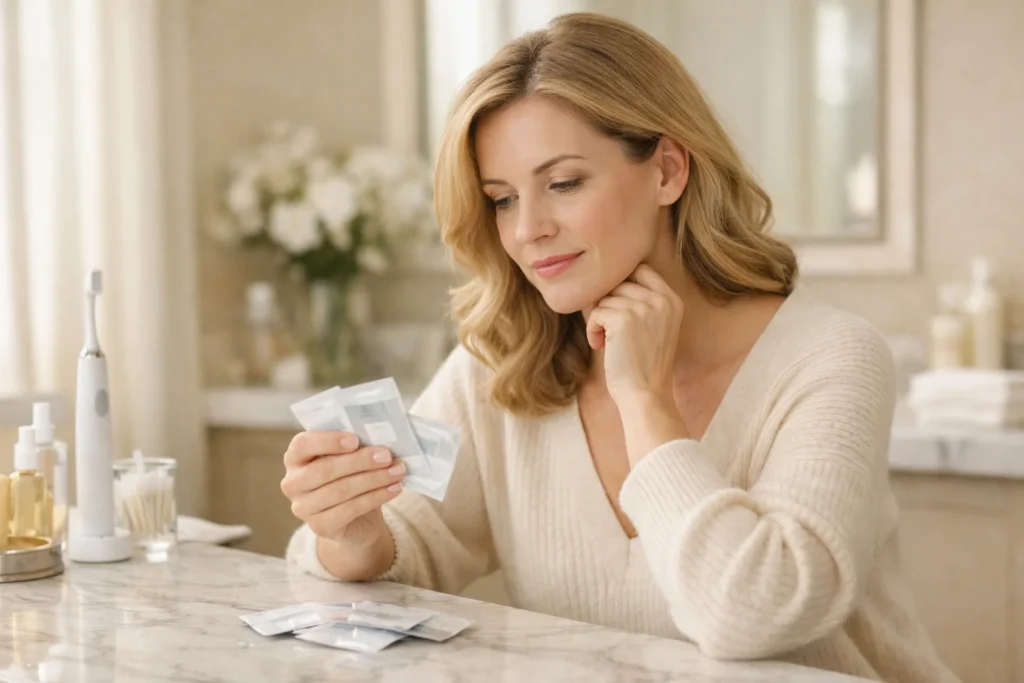
If you have ever tried whitening before and then backed off because your teeth felt zingy, cold-sensitive, or just “too aware,” you are not automatically someone who should give up on whitening strips. But you probably are someone who should stop choosing them the way a low-sensitivity user would. The NHS notes that tooth sensitivity is one of the short-term side effects that can happen with whitening, especially when the treatment is stronger. That does not mean strips are off-limits. It means your success depends much more on choosing a gentler lane and using it with better control.
The best whitening strips for sensitive teeth are usually not the ones promising the fastest dramatic jump. They are usually the ones that leave you feeling like, “I could actually continue this.” That matters more than people think. A whitening product only helps your smile if you can use it consistently enough to get through the process without turning the whole thing into a stop-start cycle. When your teeth are sensitive, comfort is not a side issue. Comfort is part of performance.
What Usually Makes Whitening Strips Feel Too Harsh
The first mistake is choosing intensity based on ambition. You want a clearer improvement, so you assume you should go straight to the strongest option. But if your teeth are already sensitive, that often creates the exact outcome you were trying to avoid: you start strong, feel too much too fast, then stop halfway through. A slower product that you can actually complete often gives you a better overall result than an aggressive one you end up abandoning.
The second mistake is stacking too many whitening signals at once. Some people use strips while also brushing with a stronger whitening toothpaste, chasing abrasive “extra clean” feeling, or staying careless about cold drinks right after treatment. For teeth that already react easily, that layered pressure can make the experience feel worse than the strips alone. The ADA notes that whitening toothpastes and other whitening formats are not the same kind of product or the same strength layer, which is exactly why combining them casually is not always a smart move.
The third mistake is trying to judge strip quality only by how much whitening you see immediately. Sensitive teeth usually need a more controlled expectation. You are not only buying visible change. You are also buying a more tolerable path to that change. If a strip gives you slightly slower brightening but much better day-to-day comfort, that may actually be the better-performing product for your situation.
The Whitening Strip Types That Usually Fit Sensitive Teeth Better
If your teeth are mildly sensitive but you still want visible improvement, the best fit is usually a gentle daily-use whitening strip. This type is for you if your teeth react sometimes, but not to the point where whitening feels impossible. You want something stronger than whitening toothpaste, but you still want the experience to feel manageable and low-drama. This is often the most balanced entry point because it gives you a real brightening step without jumping too hard into the strongest lane.
If your biggest issue is that your teeth are already quite reactive to cold, sweet, or previous whitening attempts, then a sensitive-teeth whitening strip is usually the better match. This is the strip type to prioritize when comfort is not just a preference but a real condition for whether you can keep going. The goal here is not the fastest transformation. The goal is to make whitening feel possible again. Recent ADA reporting also notes that slower carbamide-peroxide-based approaches may reduce sensitivity risk compared with faster, stronger hydrogen peroxide-led approaches, which supports the general logic of choosing gentler, slower-acting whitening when sensitivity is a major factor.
If your teeth are not highly sensitive all the time, but you know they can become reactive once whitening starts, then a short-wear or lower-intensity strip can be a smart middle-ground choice. This type suits you if you still want a meaningful cosmetic step, but you do not trust your teeth to tolerate a long contact time or a more aggressive formula. In other words, you are not trying to do the most. You are trying to do enough, in a way you are still willing to repeat.
How to Choose the Right One Without Overthinking It
The easiest way to choose is to stop asking, “Which strip whitens the most?” and start asking, “What level of whitening can I realistically stay with?” If you have had sensitivity before, that question matters far more.
If you mainly want your teeth to look cleaner, brighter, and a little more polished, and you are not dealing with heavy staining, you probably do not need the strongest strip category. A gentler, lower-pressure option is usually enough to move your smile in the right direction.
If you have tried whitening before and sensitivity was the reason you stopped, then do not treat that as a motivation problem. Treat it as a product-fit problem. You likely need a more comfort-oriented strip type, not a stronger mindset.
If your teeth react easily in general, even outside whitening, then your best strip is usually the one that respects that reality from the start. Pushing through discomfort is not a smart whitening strategy. It usually just turns a beauty-upgrade goal into a recovery period.
What Results You Should Actually Expect
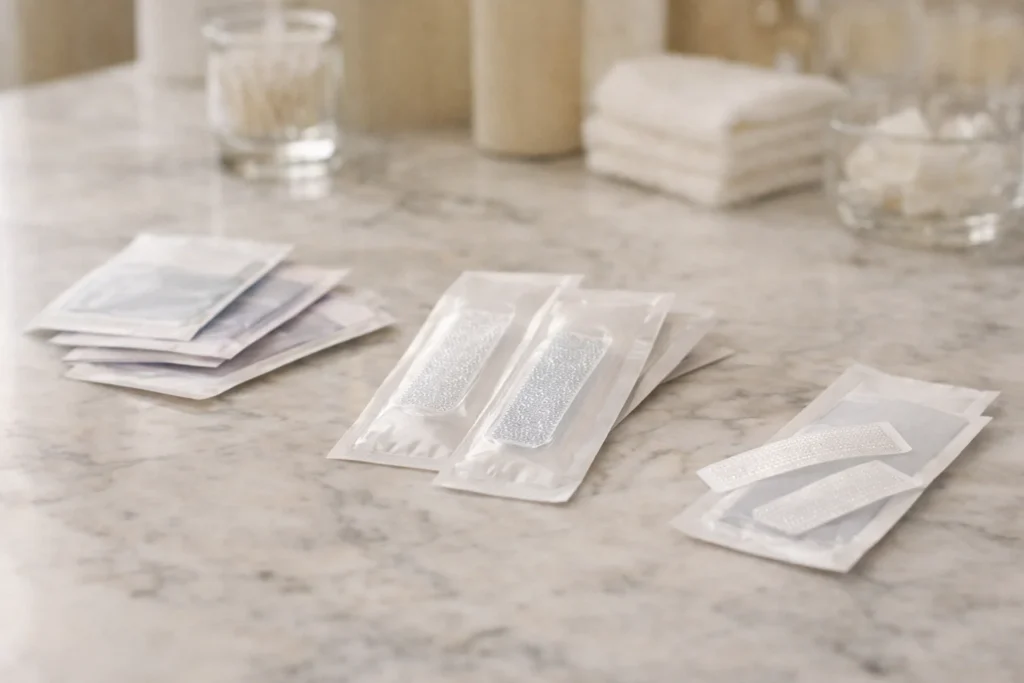
Whitening strips can be a very good step for people who want more visible brightening than toothpaste can usually provide. But they still work best when your expectations match the layer. The ADA makes clear that whitening methods come in different formats and intensities, and not all of them are intended to do the same job. Strips are not the lightest brightening category, but they are also not automatically the best answer for every smile goal.
If your teeth are sensitive, the best result is often not “the whitest possible teeth in the shortest possible time.” It is a cleaner, brighter, more refined look that you reached without making your teeth feel punished. That kind of result is often more attractive in real life anyway. It looks believable, polished, and sustainable.
This is also why some people should move into strips only after they have already improved the basics of their whitening routine. If your teeth still look dull mainly because of surface buildup, staining habits, or weak product matching, then strips may work better once the rest of your routine is no longer dragging the result down.
When Whitening Strips Are Probably Not Your Best First Step
If your teeth are already very sensitive before you even begin, or you are worried that whitening may simply feel too harsh, then strips may not be your first move. In that case, you may do better starting with a gentler whitening route first, then deciding later whether you still need a stronger layer. That is especially true if your real goal is just to look fresher and cleaner, not dramatically whiter right away.
You should also be more cautious if you have restorations, uneven tooth color, or one tooth that looks different from the rest. The ADA notes that whitening does not whiten tooth-colored restorations the same way it whitens natural teeth, so “best strip” is not always the right question when the color issue is not uniform across your smile.
And if you are trying to whiten while also ignoring the reason your teeth feel sensitive in daily life, that is usually the wrong order. Whitening works best when your mouth already feels reasonably stable.
A Better Whitening Plan Usually Feels Calmer, Not More Aggressive
If you are trying to make your teeth look whiter without triggering that familiar sensitive-teeth regret, the better path is usually calmer than people expect. Choose a strip type that matches your tolerance. Keep the rest of your routine from becoming too intense at the same time. Judge success by whether the process still feels workable, not only by whether it feels powerful.
That calmer approach is often what makes whitening look more polished in the end. Not because it is dramatic, but because it is stable. And when your teeth are sensitive, stable is usually the version that actually gets finished.
If you want the complete whitening solution, we also have a broader guide that helps you see the full path more clearly, from basic brightening to stronger whitening layers and how to choose them in the right order.
And if you already know that one specific part of whitening still is not working for you, the most useful next click is usually not another random product page. It is the support page that matches the exact point where your result keeps getting stuck.
Affiliate Disclosure:
Some of the links on this page may be affiliate links, which means we may earn a small commission if you make a purchase through them, at no extra cost to you. We only recommend products that are relevant to the topic and that we believe may be genuinely useful to you.
References and source directions:
American Dental Association (ADA): whitening categories, stain-removal toothpaste direction
NHS: staining sources such as coffee, tea, red wine, smoking; whitening is not permanent
Mayo Clinic: twice-daily brushing, two-minute brushing, daily cleaning between teeth