Why Whitening Toothpaste Doesn’t Work
You switched to whitening toothpaste, and you are paying more attention to brushing than before, yet when you look in the mirror, your teeth still do not show the kind of change you expected. They may not be especially yellow, and they may not be at a very obvious stage, but they still have not truly become brighter, cleaner, or better-looking. You may start wondering whether you chose the wrong toothpaste, whether these products do not really work at all, or whether your teeth simply cannot get any whiter.
That feeling is actually very common. Because “whitening toothpaste doesn’t work” does not necessarily mean you did everything wrong, and it definitely does not mean all whitening toothpaste is worthless. A lot of the time, the real issue is not whether you are using it, but that what you expect from it and what it is actually capable of doing are not even on the same level. You are expecting a more visible appearance upgrade, while what it may really provide is only a lighter level of surface brightening support. If those two things are not separated clearly, it becomes very easy to think: I already started using it, so why do my teeth still look the same?
What makes this more frustrating is that this kind of disappointment can make everything feel more chaotic. You may keep switching to another toothpaste. You may start wondering whether you need to jump straight to something stronger. You may even think maybe you just have not used it long enough. As a result, you make a lot of moves, but the direction becomes blurrier and blurrier. What is actually more worth understanding first is not “which toothpaste should I buy next,” but this: what is whitening toothpaste really meant to solve, and why does it seem ineffective at your current stage?
Whitening Toothpaste Can Help Some People, but It Was Never Meant to Be the Answer to Every Whitening Goal
The moment many people see the words “whitening toothpaste,” they naturally interpret it as: once I start using this, my teeth should keep getting whiter. But in reality, these products more often help improve certain surface conditions so the teeth can look a little fresher, not automatically push them into a clearly visible whitening stage. In other words, they can absolutely help some people, but they were never designed to solve every level of whitening need in one step.
That is exactly why so many people feel disappointed early on. What you want is a more visible brightness boost, a more photogenic look, maybe even that immediate sense that your smile looks upgraded. But if the issue you are dealing with is no longer just a lightly dull surface and has already become deeper staining, more obvious appearance stagnation, or a stage beyond basic brightening, then relying on whitening toothpaste alone will naturally feel like nothing is really moving.
So what this article is really trying to help with is not simply answering “does whitening toothpaste work?” It is helping you see clearly: what stage is it actually suited for, what stage is it not suited for, why it may feel ineffective for you, and which direction may make more sense next.
A Lot of the Time, Whitening Toothpaste Is Not Completely Useless. Your Goal Has Simply Moved Beyond What It Can Really Do.
This is the key point. If your teeth only have a little surface yellowing, grayness, or dullness, and all you want is for your daily look to feel a little fresher, then whitening toothpaste can usually still make sense as a starting point. But if what you really want is a more obvious brightening change, or you have already used it for quite a while and your teeth still look dull, old, and flat, then the issue is often not that this kind of product has no value. It is that your goal is no longer at the layer it is best designed to handle.
A lot of people interpret “no results” as “this product is bad.” But the more accurate interpretation is usually: “this product cannot solve the level of problem I am dealing with right now.” Those are two very different things. The first way of thinking makes you keep switching products. The second makes you start asking which stage you are actually in. For most people stuck here, what they really need is not another random toothpaste trial, but a clearer separation between whether they are still in the basic brightening layer or whether they have already reached the stage where stain removal, efficiency upgrades, or more visible whitening make more sense.
If you do not separate that out, it becomes very easy to stay trapped in the same loop: buy one, use it for a while, feel no change, switch to another one, and feel no change again. In the end, you start concluding that “whitening toothpaste never works,” when the real issue is that you never judged whether this category was even supposed to carry the goal you have now.
Another Common Situation Is That You Have Been Using “Whitening Toothpaste,” but the Surface Still Has Never Really Been Treated Properly
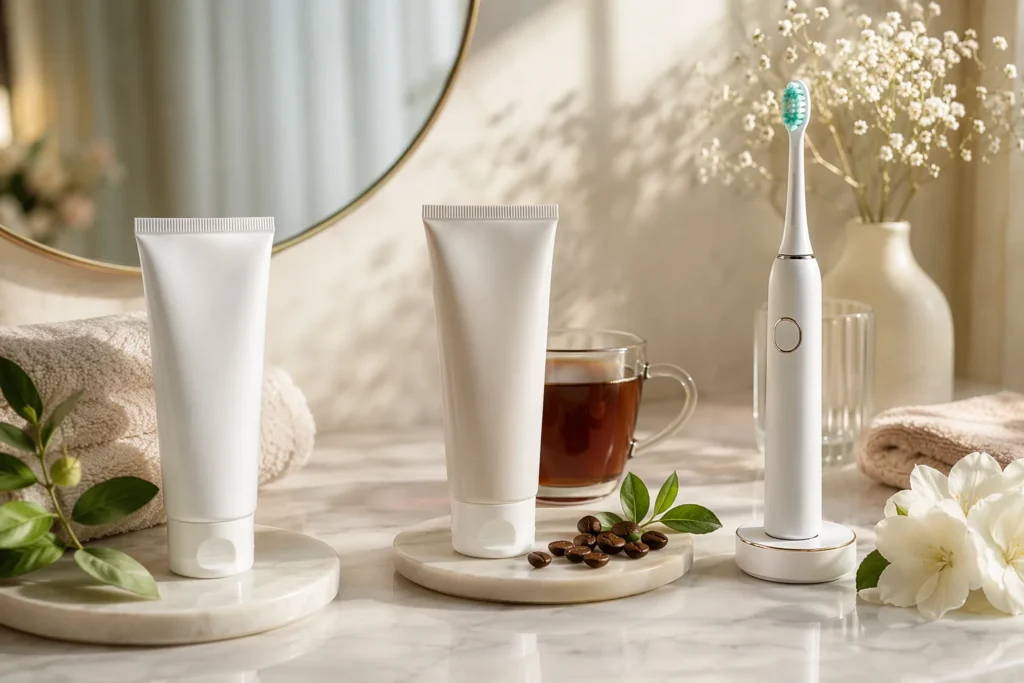
Some people are not failing to switch products. They have already tried several kinds of so-called whitening toothpaste, yet their teeth still look yellow, gray, or old. At that point, the issue is often not just whether the toothpaste has a whitening claim on it, but whether the surface staining on the teeth has ever really been addressed effectively. This becomes even more obvious if you regularly drink coffee, tea, or other dark beverages. In that kind of situation, ordinary brightening support often is simply not enough to really lift a surface that has been collecting stain over time.
You feel like you already upgraded, because you are no longer using ordinary toothpaste. But when you look in the mirror, your teeth still look the same. This is where people most easily misread the situation and start thinking maybe all whitening products are meaningless. But a more realistic answer is often that you are still using a lighter-level category, while the layer you actually need first is a more targeted stain-removal direction.
That is also why some people only feel “maybe a little fresher” after using whitening toothpaste, yet never come close to the brighter, whiter, more polished effect they wanted. Because what they are missing at that stage is no longer light brightening. It is more targeted surface treatment.
For Some People, the Real Problem Is Not the Toothpaste at All. It Is Cleaning Efficiency.
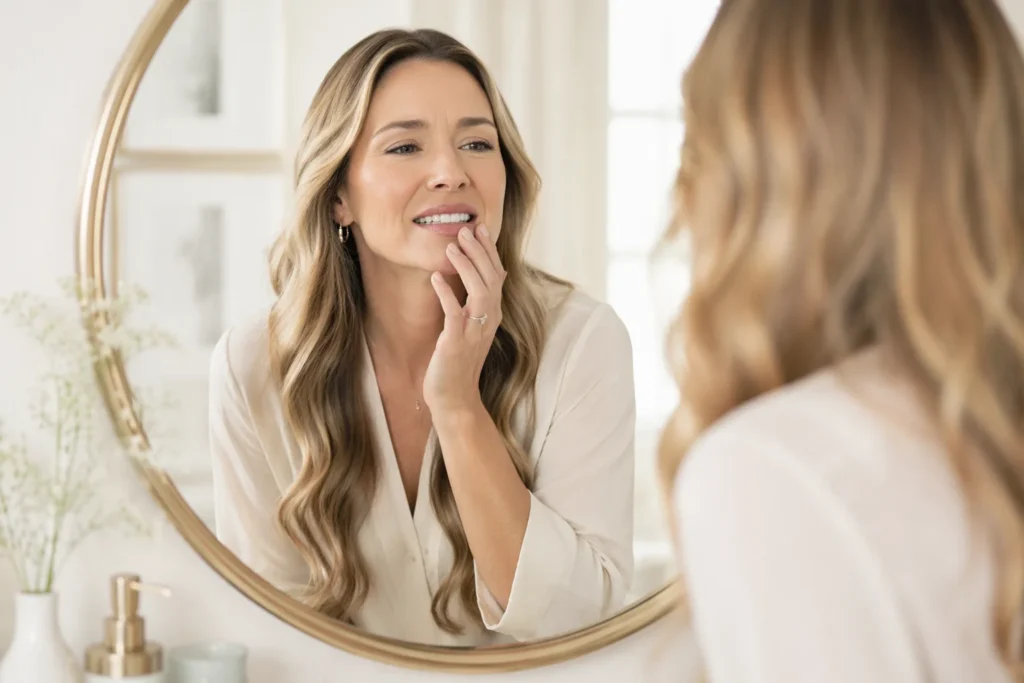
There is another very common situation: you think the issue is the toothpaste, when the real issue is cleaning efficiency itself. You brush every day, and you are not careless about it, yet the tooth surface still does not look neat enough, clean enough, or polished enough. In that kind of case, even if you switch from ordinary toothpaste to whitening toothpaste, you still may not get the change you hoped for. Because you changed the product, but you did not improve whether the tooth surface is actually being cleaned and refined more effectively.
A lot of people miss this layer because “switching toothpaste” sounds more direct and easier than “changing the whole cleaning method.” But sometimes what is really keeping tooth appearance stuck is not that a specific toothpaste is weak. It is that your overall cleaning efficiency is still sitting at a fairly basic level. You completed the brushing action, but you did not really move the surface toward a cleaner, smoother, more polished appearance.
That is why some people keep having the same feeling over and over: I already changed products, but the mirror still looks the same. The problem may not be that the product has no effect. It may be that you are expecting toothpaste alone to do a job that really requires both the right product direction and better cleaning efficiency.
What Many People Are Really Stuck On Is Not “Does This Toothpaste Work?” but “Should I Still Be Relying Only on Toothpaste at This Stage?”
This is actually the most important point. Because as long as you keep placing all your hope on whitening toothpaste alone, it becomes very easy to stay stuck in place. You keep comparing ingredients, names, and which one sounds like the “stronger” version. But if your stage has already moved beyond what light brightening can solve, then no matter how many different tubes you rotate through, the result may keep feeling almost the same.
In other words, the better question is not “which whitening toothpaste is strongest?” It is “have I already reached the point where I should stop relying only on toothpaste and move into the next layer?” If what you have is still just mild dullness, then toothpaste may still make sense as a starting point. But if you have already been using it for a while and still see no meaningful change, then continuing to spin around only inside the toothpaste category usually will not be the most efficient move.
So “whitening toothpaste doesn’t work” is not always really a product judgment problem. Sometimes it is a path judgment problem. What it may be telling you is not “this category has no value,” but “your route probably needs to be upgraded.”
If What You Notice Most Is That the Tooth Surface Still Looks Dull, Then It Makes More Sense to Move Toward a More Targeted Surface Stain Direction
If the main thing you see in the mirror is not severe yellowing, but a slight dull, gray, tired-looking surface that just never feels fresh enough, then it makes more sense to look at a more clearly surface-stain brightening direction rather than continuing to stay inside the vague idea of “whitening toothpaste.” At this stage, the most important thing is not to make the teeth dramatically white immediately. It is to remove that surface layer that keeps making them look tired.
If you’ve tried several different toothpastes but your teeth still look older and less fresh, the problem may not be the toothpaste itself. The issue may lie in the effectiveness of your brushing routine. In this case, it’s usually a better idea to switch to an electric toothbrush designed to remove stains.
If you’re tired of worrying about the specific features of electric toothbrushes, this practical all-in-one model is the perfect choice for you. It’s ideal for those who don’t want to fuss over single-function options like whitening, polishing, or daily cleaning—one toothbrush meets all your oral care needs.
You Do Not Need to Jump Straight to the Strongest Whitening, but You Should Stop Staying Trapped in the Same Layer
This is where a lot of people keep delaying the next move, because it is easy to think: maybe I just need one better whitening toothpaste. But if you have already had that feeling again and again—“it still does not look different”—then the issue usually is not “find one more tube.” It is “stop staying inside the same layer.” Otherwise, what looks like adjustment is often just horizontal movement inside one category that is no longer enough.
More realistically, what usually drags appearance down is not “I never started.” It is “I kept restarting in a layer that was already too weak for my goal.” You feel like you are moving forward, but the actual change stays small. For smile-enhancement content like this, what matters most is escaping that exact state: the state where you have already started, but still have not actually moved up a level.
So what matters most now may not be chasing a dramatic whitening result immediately. It may simply be recognizing one important thing: if you have already used whitening toothpaste for a while and still are not seeing the change you hoped for, the issue may not be that you have not been persistent enough. It may be that this simply is no longer the layer you need.
Once You Start Working in a Way That Actually Fits Your Current Stage, Tooth Appearance Can Finally Start Moving
This is why so many people suddenly feel clearer once they stop putting all their hope on the “next toothpaste.” The moment you do that, your judgment usually gets much sharper. You begin asking more useful questions: am I only missing a little brightness, or is the surface stain too obvious? Do I need a more targeted toothpaste direction, or better cleaning efficiency? Or have I already reached the stage where I need to move beyond light brightening altogether?
Once that becomes clear, the next step stops feeling chaotic. You are no longer comparing packaging and marketing words at random. You are looking for the starting point that actually fits your current condition. Very often, what finally changes the way teeth look is not one magical toothpaste. It is that you stop expecting toothpaste alone to carry the whole problem.
If You Want to See This More Completely, the Best Next Step Is the Complete Whitening Solution
“Why whitening toothpaste doesn’t work” is only one specific branch inside the overall whitening path. It is common, and it is worth explaining clearly on its own, but it is not the whole path. If this article has already helped you see that the issue is not just one toothpaste, but that your entire whitening path still has not really been built, then the best next step is not to stay only inside this one point. It is to look at the complete whitening solution, where the layers of basic brightening, surface stain removal, visible whitening, and long-term maintenance are all laid out clearly.
If what you need most right now is not one single product, but a clear view of the whole road ahead, then the best next thing to read is:
If you can already feel that the problem is not that you are doing nothing at all, but that one specific part of the process still has not connected properly, then the related articles below will usually be the better next click. They break down the most common sticking points one by one, so you do not have to keep guessing what needs to change next. You can start with the one that feels most like your current situation, and that usually gets you to a more useful next step faster than reading more general whitening advice.
Affiliate Disclosure:
Some of the links on this page may be affiliate links, which means we may earn a small commission if you make a purchase through them, at no extra cost to you. We only recommend products that are relevant to the topic and that we believe may be genuinely useful to readers.
References and source directions:
American Dental Association (ADA): whitening categories and stain-removal directions
NHS: staining sources such as coffee, tea, red wine, smoking
Mayo Clinic: daily brushing and clean-between-teeth guidance