Why Do Teeth Turn Yellow Over Time
You rarely wake up one day and suddenly feel that your teeth turned yellow overnight. What usually happens instead is much subtler. At some point, while looking in the mirror, taking a photo, or comparing your smile to older pictures, you get a vague but very real feeling: your teeth just do not look as bright as they used to. They may not be dirty, and they may not look dramatically yellow, but they seem to have lost some freshness and some clarity. As that happens, your whole smile starts to feel a little less polished too.
This is why the question “Why do teeth turn yellow over time?” feels so personally relevant. It doesn’t happen suddenly, nor does it happen overnight; rather, it’s a gradual process. You brush your teeth every day and haven’t completely neglected your dental care, yet the appearance of your teeth gradually turns yellow without you even noticing. Precisely because this change doesn’t happen overnight, many people either choose to ignore it or assume it’s a normal occurrence beyond their control. However, once you start caring about your smile and overall appearance, this gradual yellowing, darkening, and aging effect can significantly impact your confidence and poise.
More importantly, this kind of change does not always mean your teeth are actually “in trouble.” Very often, it simply means your daily care is still sitting at the basic-cleaning level while your goal has already moved forward. You are no longer only trying to keep your teeth from looking dirty. You want them to look brighter, cleaner, and younger. Once that goal changes, you naturally start caring much more about why they seem to be turning yellow over time.
Teeth Usually Do Not Turn Yellow All at Once. The Change Builds Gradually.
Changes in tooth appearance are rarely created in a single moment. More often, they build up slowly. A little more coffee today, more tea tomorrow, ordinary brushing but no real surface-focused care, no targeted brightening, no effort to maintain a cleaner-looking finish. Taken day by day, none of these things looks dramatic enough to make you think your teeth are changing. But when those small things pile up over months and years, you eventually notice that your teeth have lost that brighter, cleaner, more energized look.
This is also where a lot of people misread the situation. You may feel like you have not done anything especially bad for your teeth, and you brush regularly, so why do they still seem to get more yellow? Often, the issue is not that you made one big mistake. It is that many small staining factors have been quietly building up while you never really used a more targeted way to deal with them. Over time, teeth move from “still pretty bright” to “fine,” and then from “fine” to “slightly yellow, gray, or dull.”
For most people, what makes teeth look more yellow over time is not just the color itself. It is the overall drop in appearance. Teeth start looking older and less lively. The smile loses some of its freshness and polish. So when you care about why your teeth are turning yellow, what you are really trying to understand is often not a purely medical question. It is: what is slowly dragging down the way my smile looks?
Surface Staining Is the Most Common Layer, and Also One of the Most Underrated
If you regularly drink coffee, tea, or other dark beverages, or if your diet includes a fair amount of darker-colored foods, then gradual yellowing on the tooth surface is actually very common. Public health guidance like NHS materials also lists coffee, tea, red wine, and smoking among common stain sources. In other words, a lot of people do not get yellower-looking teeth because of some sudden abnormal event. Their daily habits are simply adding more and more color burden to the surface of their teeth over time
The problem is that this kind of surface staining usually is not dramatic enough to make you think something is seriously wrong, but it is more than enough to affect appearance little by little. You may brush every day, but if all you ever do is basic cleaning without actually addressing surface stain, that color keeps sitting on the outer layer of the teeth. As time goes on, your teeth lose some of their brightness, some of their freshness, and they start looking older in photos too.
A lot of people at this stage have the same thought: I am brushing. I am not unhygienic. So why do my teeth still seem to be getting more yellow? At that point, the first thing worth questioning usually is not “Do I have a bigger problem?” It is “Have I been doing nothing but basic cleaning while never really treating the surface appearance?” Very often, once you see that layer clearly, the path forward becomes much easier.
There Is Another, More Subtle Version of This: Your Teeth May Not Look Very Yellow, but They Look More and More “Dull”
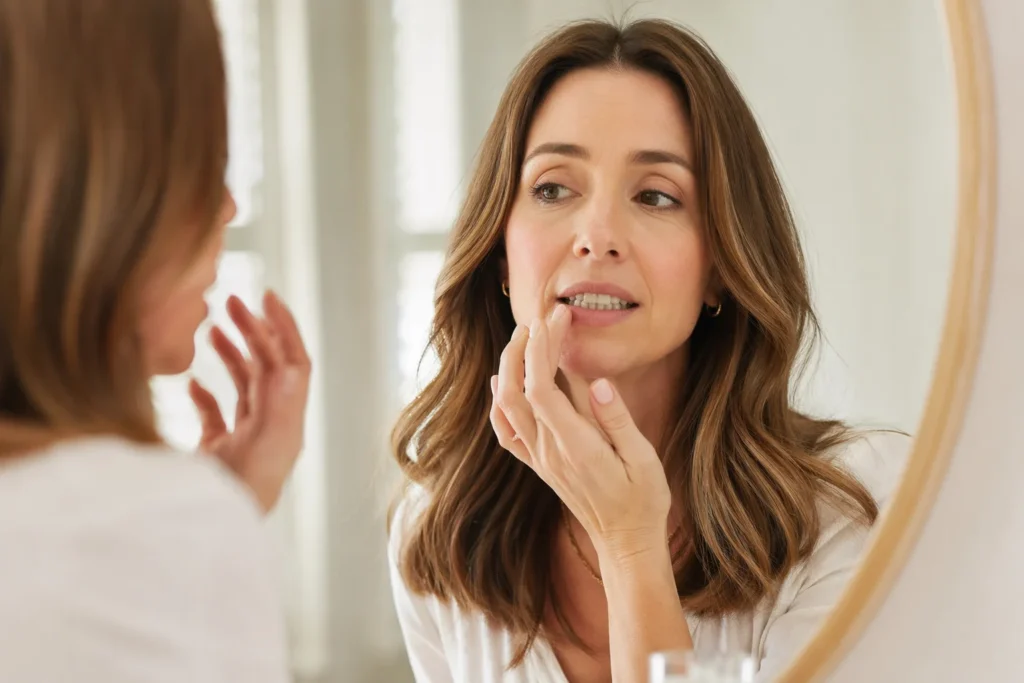
Some people do not look at their teeth and think, “They are really yellow.” Instead, they keep noticing that their teeth do not look bright enough, clear enough, or clean enough. It is not an obvious yellow. It is more like a dull, gray, slightly tired look. That version is often easier to overlook because it does not stand out as dramatically as strong staining, but it still affects the whole smile in a very real way.
This kind of change often gets brushed aside. You tell yourself maybe you just look tired, maybe the lighting is bad, maybe the photo angle is wrong, maybe you are imagining it. But if that feeling keeps coming back, it usually is not your imagination. You may already be past the stage of asking, “Are my teeth clean?” and into the stage of asking, “Do my teeth actually look bright, fresh, and put together?” In other words, you are no longer judging hygiene alone. You are judging appearance.
That is also why people become more sensitive to “yellowing” over time. Because what starts bothering you is often not the raw color value itself. It is whether your teeth are making your whole smile feel less polished. Even without deep yellowing, teeth that look duller and more muted can make your whole face seem less fresh and your smile less lively.
Teeth Also Tend to Look More Yellow Over Time When Care Never Moves Beyond the Basic Layer
A lot of people are not doing nothing. They are just staying at the most basic level of care for too long. You keep brushing, and you may keep using an ordinary toothpaste, but you never really separate “basic cleaning” from “appearance improvement.” That is not wrong in itself, but it usually only helps maintain a lower baseline. It does not do much to move your teeth toward looking brighter, cleaner, and more polished.
The ADA has long made fairly clear distinctions between whitening-related categories: some products are more about basic cleaning, some are more about surface stain removal, and some are better suited for more visible brightening support. That difference matters because it shows one very important thing: not every daily oral-care step will naturally move your teeth toward a whiter-looking appearance.(ada.org)
If your routine has stayed at “ordinary cleaning” for a long time, then it is not surprising that your tooth appearance slowly drifts downward. You are doing things that maintain the floor, not things that raise the look. A lot of people do not feel like their teeth are getting yellower because they suddenly did something wrong. They feel that way because they never moved from the basic-cleaning layer into the layer that actually supports smile appearance.
If What You Notice Most Is That Your Teeth Look More and More Dull, Start by Looking at the Surface-Brightening Layer
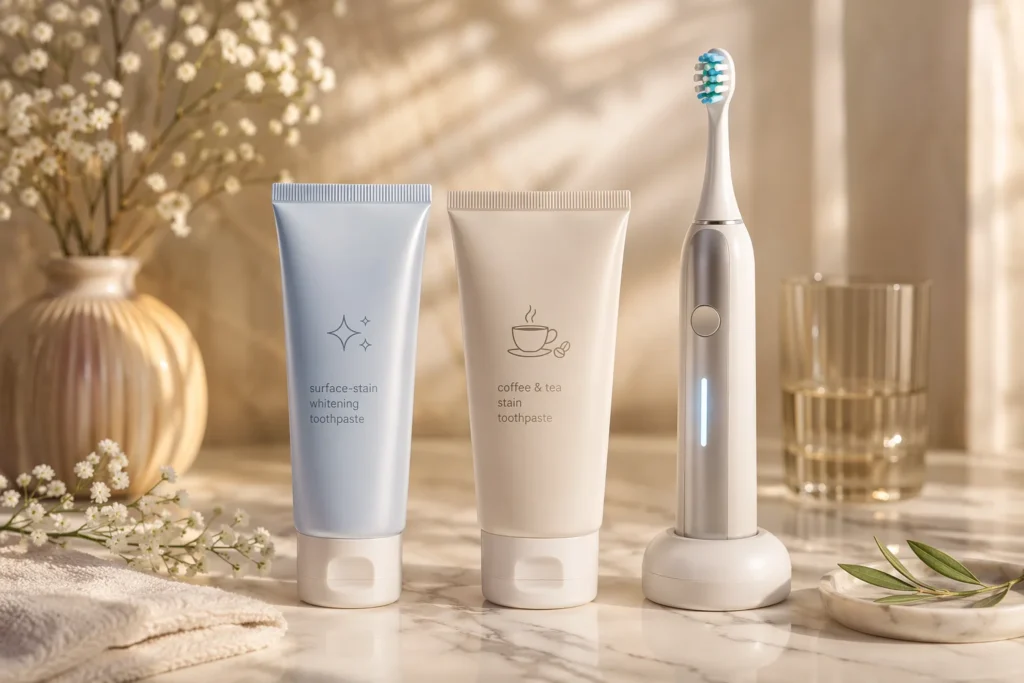
If what you mostly see in the mirror is not strong yellowing, but teeth that look a little muted, a little gray, a little older, then it usually makes more sense to start with a surface stain–brightening direction. At this stage, the goal is not to chase the most dramatic possible change. It is to remove that “my teeth are starting to look tired” feeling from the surface first.
If you have already switched a few toothpastes but your teeth still keep looking older and less fresh, then the issue may not be toothpaste alone. It may be cleaning efficiency itself. In that case, it often makes more sense to shift toward a stain-removal electric toothbrush direction.
If you’re tired of worrying about the specific features of electric toothbrushes, this practical all-in-one model is the perfect choice for you. It’s ideal for those who don’t want to fuss over individual functions like whitening, polishing, or daily cleaning—a single toothbrush can meet all your oral care needs.
You Do Not Need to Chase “Clearly Whiter” Right Away, but You Should Stop the Decline from Continuing
This part matters a lot. Many people treat yellowing as a problem that only deserves attention once it becomes severe. As if it is not worth dealing with until the teeth are very noticeably yellow. But in smile-enhancement writing like this, what matters most is often not how serious the problem is. It is whether the appearance is still slowly moving downward. If you have already started feeling that your teeth are not as bright as they used to be, then the most useful move usually is not to wait until they get much yellower. It is to stop that downward slide first.
A lot of the time, good-looking teeth are not created suddenly. They are maintained gradually. The earlier you understand what is behind that slow yellowing, the easier it becomes to pull things back with a gentler, more comfortable, more sustainable approach. On the other hand, if you keep putting it off until the look bothers you too much, you are much more likely to rush toward stronger products and turn the whole routine into something messy.
So right now, what may matter most is not telling yourself, “I need dramatically whiter teeth.” It may be telling yourself, “I need to stop this smile from continuing to look older, duller, and more yellow.” Once that part is handled properly, every next step toward brighter-looking teeth becomes much easier.
If You Want to Understand This More Completely, the Best Next Step Is the Complete Whitening Solution
“Why do teeth turn yellow over time?” is a very common and very worthwhile part of the overall whitening topic, because it directly affects why you may feel less and less satisfied with the way your smile looks. But it is not the whole path by itself. If this article has already helped you see that what you really need is not one random answer, but a clearer view of the layers—from basic brightening and surface stain removal to visible whitening and long-term maintenance—then the better next step is not to stay only on this one question. It is to go to the complete whitening solution and see the whole structure clearly.
If what you need most right now is not one single product, but a clearer view of the full path, then the best next thing to read is:
If you can already feel that the issue is not that you are doing nothing at all, but that one specific part of the process is not connecting properly, then the related articles below will usually be the better next click. They break down the most common sticking points one by one, so you do not have to keep guessing what to change next. You can start with the one that feels most like your current situation, and that usually gets you to a useful adjustment faster than reading more general whitening advice.
Affiliate Disclosure:
Some of the links on this page may be affiliate links, which means we may earn a small commission if you make a purchase through them, at no extra cost to you. We only recommend products that are relevant to the topic and that we believe may be genuinely useful to you.
References and source directions:
American Dental Association (ADA): whitening categories and stain-removal directions
NHS: staining sources such as coffee, tea, red wine, smoking
Mayo Clinic: daily brushing and clean-between-teeth guidance