Does Whitening Damage Enamel
A lot of people do not begin a teeth-whitening journey by asking, “Which option makes teeth the whitest?” Instead, they start with a different concern: could this damage my teeth? The more products, ads, and personal experiences you see, the stronger that worry often becomes. You start to wonder whether whitening naturally comes with a sense of “doing too much,” and whether wanting a brighter smile always means accepting a little discomfort. At that point, what is really stopping you is often not “Do I want whiter teeth?” but “Do I even dare to begin?”
That hesitation is actually very common, and it does not mean you are overthinking it. A lot of people do have reasons for feeling cautious about whitening. You may have seen someone say their teeth felt sore or sensitive after using certain products, or you may have come across very aggressive “fast whitening” methods that made the whole idea feel a little extreme. On top of that, the word “enamel” itself sounds important, so the moment people put enamel and whitening in the same sentence, they naturally start to feel tense.
But what is actually more useful to understand first is not simply the question, “Does whitening damage enamel?” It is to break that question apart. Because a lot of the time, what makes people uncomfortable is not whitening itself. It is starting at the wrong level, or pushing the pace too fast, too chaotically, or too hard from the beginning. If you never separate those things, it becomes very easy to swing back and forth between “I want whiter teeth” and “What if I damage them?” until you either never start at all or begin in the wrong way.
What Many People Are Really Afraid Of Is Not “Whitening” Itself, but “Doing It Too Aggressively”
This is actually the core of the issue. For many people, the moment whitening comes up, the first image in their mind is not “a fresher, brighter, cleaner-looking smile.” It is “Will this feel harsh?” “Will it make my teeth ache?” “Will it make them weaker over time?” But if you look closely, what people are usually afraid of is not a gentle, gradual brightening approach. It is the kind of whitening that feels faster, stronger, and more intense right from the start.
A lot of the caution people feel around whitening does not come from rejecting the idea of whiter teeth. It comes from not wanting to make their teeth feel tense or uncomfortable just to gain a little more brightness. This is especially true if comfort already matters a lot to you, or if you have already been sensitive to brushing pressure, cold drinks, or hot foods in the past. In that case, you are even more likely to interpret “whitening” as something risky. The problem is that if you automatically place every whitening method into the same strength category, it becomes much harder to see that different directions are not the same thing at all.
So for many people, the more useful question is not “Will whitening damage my teeth?” but “Am I looking at gentle brightening, surface stain removal, more visible whitening, or a stronger layer beyond that?” Once that becomes clear, the fear usually starts to settle down. You begin to realize that whitening is not only one intensity level, and not every step has to feel heavy.
A Lot of the Fear That “Whitening Damages Teeth” Comes from Mixing Different Layers Together
A lot of people assume that if a product has the word whitening on it, then it all belongs to one category. But in reality, different kinds of whitening products do different jobs. Some are more about daily brightening. Some are more about surface stain removal. Some are closer to, “I want to see a much more visible change.” If you blur all of those together and then ask, “Will this damage enamel?” the question itself becomes too vague to answer well.
Organizations like the ADA have long separated different home-whitening categories in their guidance, and that alone tells you something important: not every whitening direction belongs to the same intensity level, and not everyone should begin with the most visibly aggressive step. For a lot of people who are still in the stage of light yellowing, dullness, or slight discoloration, the better starting point is not chasing the strongest possible result. It is beginning at a gentler, more comfortable level that is easier to live with over time.
In other words, when people later feel that whitening was “too harsh” or start worrying they may have overdone it, that does not necessarily mean the idea of whitening itself was the problem. Very often, it means they never made a stage judgment first. They only needed a lighter level of brightening, but jumped straight to something stronger. They should have first addressed surface condition, but skipped that layer and chased visible change immediately. Once that happens, of course the whole process is much easier to experience as “whitening damages teeth.”
For Many People, the Real Question Is Not “Can I Whiten My Teeth?” but “Should I Be Chasing a Big Visible Change Right Away?”
This point matters a lot. Because for many people, the real starting goal is not dramatic whitening at all. It is simply wanting their teeth to look a little cleaner, a little brighter, and a little more attractive. But once people start searching online, they get pulled very quickly toward the idea of the most obvious visible change. Before long, what started as a simple smile-enhancement goal begins to feel like a high-intensity project.
That is also why a lot of people become afraid before they even start. It is not that you do not want whiter teeth. It is that you do not want to make your teeth uncomfortable just to chase a result you are not even sure you need. But if what you really want right now is just more day-to-day brightness, a cleaner-looking surface, and a steadier visual upgrade, then the first layer you should be looking at was never supposed to be the heaviest one. In other words, it is not that whitening is wrong for you. It is that you are usually better off judging yourself from a lighter layer first.
Mayo Clinic’s basic oral-care guidance still keeps brushing and daily cleaning between the teeth at the foundation level, and that itself is a useful reminder: the more stable kind of whitening is not about stacking a lot of things onto your teeth all at once. It is about starting from a steady foundation and then layering carefully.
For people who worry about enamel, that can become an important mental shift: you do not have to think of whitening as forcing your teeth through something harsh. You can think of it as a more suitable upgrade built on a steadier base.

What Usually Makes Whitening Feel Too Heavy Is Not the Product Alone, but a Pace That Is Too Fast and Expectations That Are Too High
Some people approach whitening with a naturally accelerated pace. They want a brighter smile today, so they want visible change tomorrow. If they do not see it quickly enough, they wonder whether they need something stronger. If the result is not immediate, they think about adding more steps. A lot of the time, what makes the whole experience feel tense is not one specific product on its own. It is that mindset of wanting results too fast.
The NHS repeatedly reminds people that whitening is not permanent, and also points out that habits like coffee, tea, red wine, and smoking continue to affect tooth appearance over time. That reminder is useful because it shows something important: whitening is much more like a path than a sprint.
And if it is not a sprint, then pushing it with a “faster is better” mindset usually makes a lot less sense.
For many people, once that internal pace slows down, the whole experience becomes much more comfortable. You stop obsessing over “How much whiter do they look today?” and start asking better questions like “Does this direction actually fit me?” “Does this feel comfortable afterward?” and “Are my teeth gradually moving toward a fresher-looking state?” That kind of pace is often much easier to keep up long term, and it becomes much less likely that whitening will feel like something that damages your teeth.
If Comfort Is Already a Big Priority for You, Then You Should Be Judging from the Gentler Brightening Layer First
If your biggest concern right now is that whitening may feel too harsh, too sharp, or too tense, then you are probably not someone who should start at the strongest end of the spectrum. You are better off first judging yourself through a lighter, more comfort-oriented, gentler brightening layer. The point of that route is not to create huge visible change immediately. It is to help you build trust in the idea that whitening does not always mean strong stimulation, and it does not always have to feel heavy right from the beginning.
If what you need most right now is a lighter, steadier, easier-to-begin direction, then it makes more sense to start by looking at the daily whitening toothpaste layer. That is usually a better fit for people who want to begin with “a little fresher” rather than something dramatically visible right away.
If the main thing you see in the mirror is slight yellowing, grayness, or dullness, but you still do not want the process to feel too stimulating, then it makes more sense to start with a surface-stain brightening route that still stays on the gentler side.
If you are especially sensitive to discomfort, or comfort is the single biggest thing that matters to you, then it makes more sense to begin with a sensitive-friendly whitening direction.
The most important meaning of this layer is not giving you an especially dramatic result. It is helping you step out of the mindset of “What if this damages my teeth?” and begin approaching whitening in a way that feels calmer and safer.
If You Already Want More Visible Whitening, Then the Key Is Not “Do I Dare?” but “Have I Built the Foundation and the Pace Correctly?”
Some people will read this and realize that they do not only want light brightening. They already know they want a more visible result. In that case, yes, you can move toward a more direct whitening layer. But the most important question is not simply “Will this damage enamel?” It is: Have I built a stable foundation first? Is my pace reasonable? Do I understand why I am moving into this stronger layer?
A lot of people only get themselves into trouble not because they whitened at all, but because they rushed into a more visible layer before the earlier layers were in place. You may have only needed to address surface stain first, but jumped straight to a stronger whitening approach. You may have only wanted to improve appearance, but used a pace that did not fit your actual stage. When that happens, it becomes much easier to interpret the whole experience as “whitening damages enamel.”
So if you already want a more visible result, the real issue is never just “Do I dare to use it?” It is “Am I actually at the point where this layer makes sense?” Once that judgment is right, a lot of unnecessary tension, overcorrection, and avoidable mistakes can usually be sidestepped.
Truly Safer Whitening Is Not About Doing Nothing. It Is About Doing What Fits You Better.
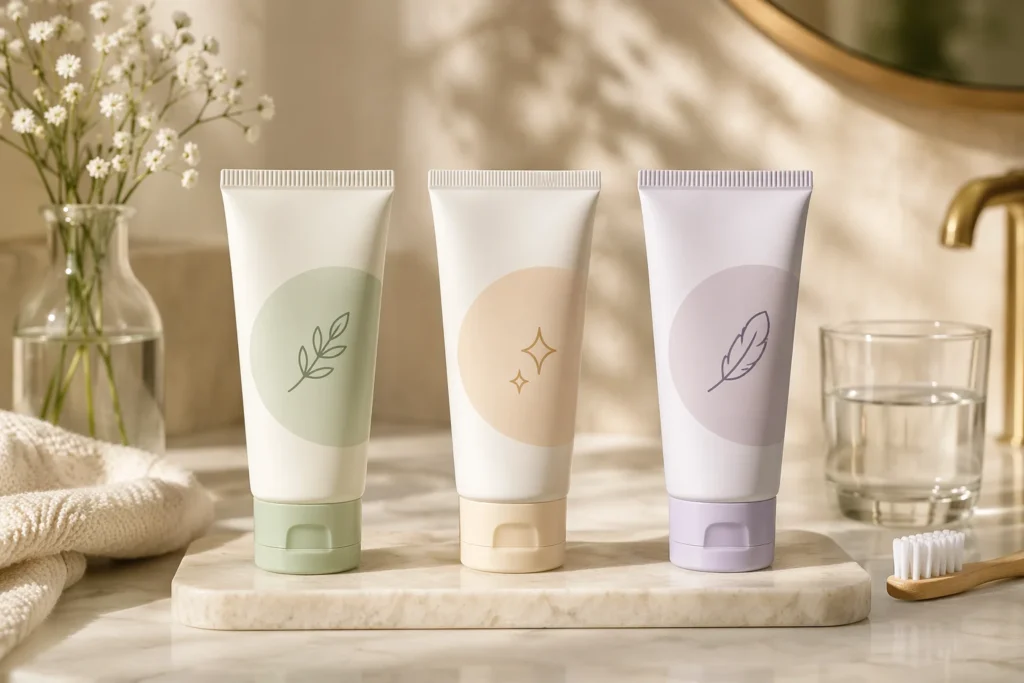
This is exactly why so many people misunderstand the relationship between “safe” and “effective.” It can feel like you only have two choices: either stay very conservative and avoid whitening entirely, or try to get whiter teeth and accept some discomfort. But the better whitening path is usually not about choosing an extreme. It is about choosing the layer that fits your current stage, and setting the pace correctly.
If you are only dealing with slight yellowing or dullness right now, then begin with the gentler brightening layer.
If your biggest issue is surface stain and an older-looking surface, then get the surface stain–removal layer right first.
If you are already ready for more visible change, then first make sure your foundation and pace are stable.
A lot of the time, what protects tooth condition best is not “never touching whitening at all.” It is avoiding the mistake of doing something too fast, too heavy, or too chaotically right from the beginning.
In other words, when whitening becomes a problem, it is often not because “this direction should never have been used.” It is because it was used in the wrong way, at the wrong time, for the wrong person. Once you see that clearly, the question “Does whitening damage enamel?” usually stops feeling like a pure fear question and starts feeling like something you can judge more calmly.
If You Want to See This More Completely, the Best Next Step Is the Complete Whitening Solution
“Does whitening damage enamel?” is only one specific branch inside the larger whitening path. It is common, and it is worth explaining clearly on its own, but it is not the whole picture. If this article has already helped you realize that what you really need is not a simple yes-or-no answer, but a more sensible whitening path, then the better next step is not to stay trapped inside this one worry. It is to go to the complete whitening solution, where the layers of basic brightening, surface stain removal, visible whitening, and long-term maintenance are all laid out clearly.
If what you need most right now is not one single product, but a clearer view of the whole road ahead, then the best next thing to read is:
If you can already feel that you are not completely afraid to begin, but one specific part of the process still does not feel clear, then the related articles below will usually be the better next click. They break down the most common sticking points one by one, so you do not have to stay stuck in “Should I be afraid?” and “Should I dare?” You can move more quickly toward the next direction that actually fits you.
Affiliate Disclosure:
Some of the links on this page may be affiliate links, which means we may earn a small commission if you make a purchase through them, at no extra cost to you. We only recommend products that are relevant to the topic and that we believe may be genuinely useful to you.
References and source directions:
American Dental Association (ADA): whitening categories and home-use whitening directions
NHS: whitening is not permanent; staining sources and maintenance logic
Mayo Clinic: daily brushing and clean-between-teeth guidance